What Is Bilona Ghee?
5 min read · Published 19 Jul 2026
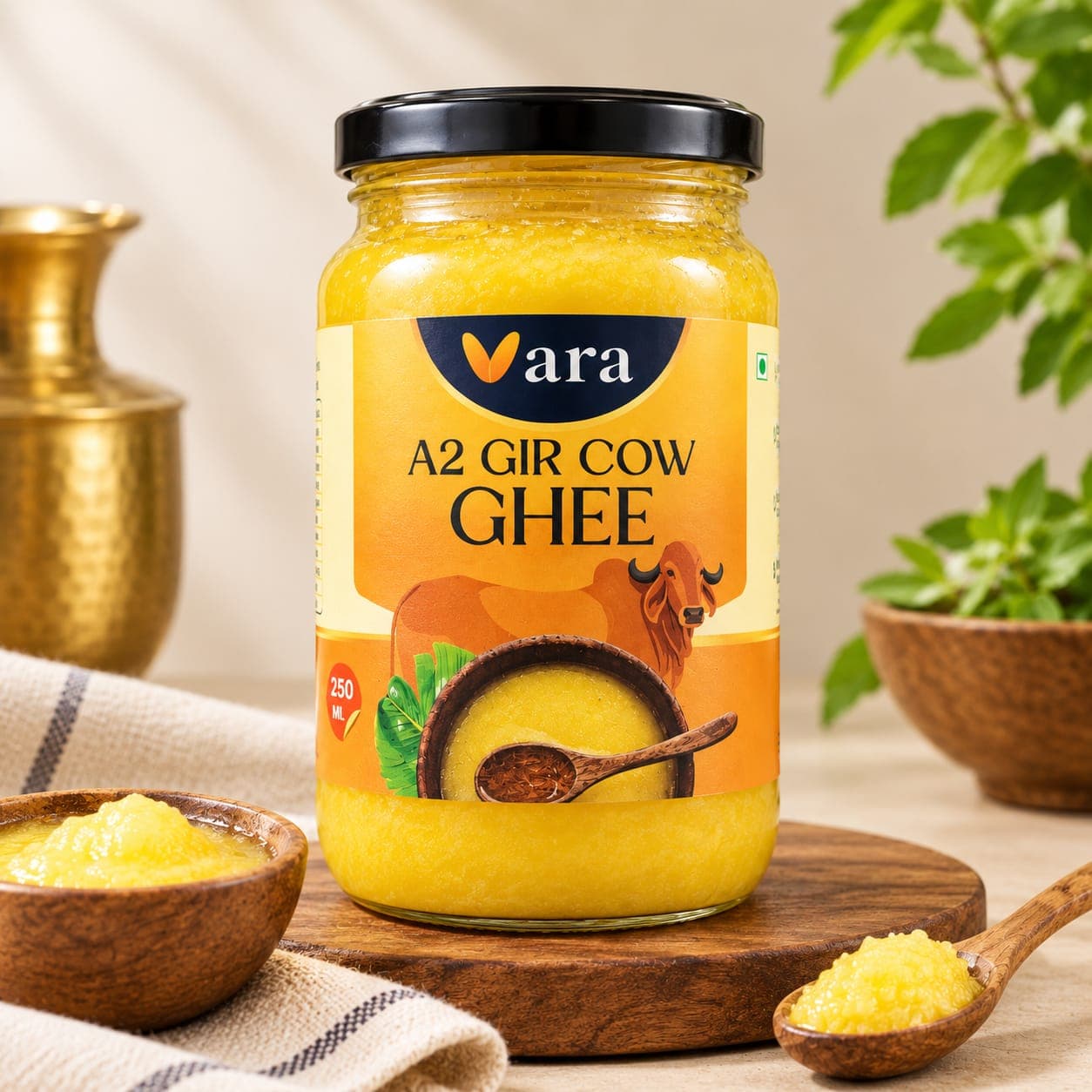
What Is Bilona Ghee?
A Simple Guide to India's Oldest Way of Making Ghee
What Does "Bilona" Mean?
Bilona is a Hindi word. It means "to churn." That's it. That's the whole secret.
Bilona Ghee is ghee made the old way — by churning curd (dahi) with hands or a wooden churner, instead of using a machine to spin cream out of milk.
It's the same way your great-grandmother probably made ghee in her kitchen. No machines. No shortcuts. Just curd, a churner, and time.
The History of Bilona Ghee
A Method That's Thousands of Years Old
Long before factories existed, Indian households made ghee this way every single week. It wasn't a "premium product" — it was just how ghee was made.
Here's how it worked in most homes, for generations:
- Fresh milk was boiled and left to set into curd overnight.
- The next morning, the curd was churned by hand using a wooden tool called a madani, tied to a rope.
- This churning separated butter from the curd — the same way butter separates from cream if you shake it long enough.
- The butter was then slow-cooked on a low flame (often a wood fire) until the water evaporated and only the golden fat remained. That golden fat is ghee.
Why This Method Almost Disappeared
When India started producing milk at a much bigger scale, factories needed a faster way to make ghee for millions of people. So a new method was invented.
Instead of churning curd, factories started spinning cream directly out of milk using a machine called a cream separator. This skips the curd-and-curd-culturing step completely.
This method is much faster and cheaper. But it also skips something important — and we'll get to that next.
Why Bilona Ghee Is Necessary (Not Just "Traditional")
This is the part most people don't know.
Curd Changes the Ghee — In a Good Way
When milk turns into curd, good bacteria grow in it. This is the same process that happens when milk becomes yogurt.
These good bacteria change the fat structure slightly during churning. The result is a ghee that:
- Has a naturally grainy texture
- Smells stronger and more "ghee-like"
- Is easier for many people to digest
- Contains more of a compound called butyric acid, which is linked to gut health
What Happens When You Skip the Curd Step
Machine-made ghee (sometimes called "creamery ghee" or "direct-cream ghee") skips the curd and culturing step entirely. It's still real ghee — but it misses out on:
- The digestion-friendly compounds that form during fermentation
- The deeper, richer aroma that comes from churned butter (not spun cream)
- The traditional nutrient profile Ayurveda has valued for thousands of years
So Why Does This Matter to You?
If you've ever eaten ghee and felt heavy or bloated afterward, it might not be "ghee" that's the problem — it might be how that specific ghee was made.
Bilona ghee is gentler on digestion for many people, precisely because of that extra curd-culturing step most modern ghee skips.
How Bilona Ghee Compares to Other Ghee in the Market
Let's keep this simple. There are three broad types of ghee you'll find today:
1. Machine-Made (Cream-Separator) Ghee
- Made by spinning cream out of milk with a machine
- Fast, cheap, mass-produced
- Skips the curd/fermentation step
- Most ghee sold in regular supermarkets is this type
2. Adulterated or "Mixed" Ghee
- Sometimes mixed with vanaspati (hydrogenated vegetable oil), palm oil, or other cheap fats to increase quantity
- Illegal, but unfortunately common in unbranded or very cheap ghee
- Usually has a flatter smell and doesn't melt or set the same way pure ghee does
3. Bilona Ghee (What We Make)
- Made the traditional way: curd → hand-churned butter → slow-cooked on a wood fire
- No machines used to separate cream
- No additives, fillers, or mixing
- Naturally grainy texture, deep aroma
- Every batch lab-tested to confirm there's no adulteration
The Honest Difference in One Line
Machine-made ghee saves time. Bilona ghee respects the process. Adulterated ghee cuts corners at your expense. Only one of these three is both traditional and verifiable.
How to Know If Your Ghee Is Really Bilona Ghee
Here's the tricky part: anyone can write "Bilona Method" on a label. The word alone doesn't prove anything.
The only real way to know is:
- Ask for a lab report — a proper lab can check the fat structure and confirm the ghee wasn't made by simple cream separation, and confirm there's no adulteration.
- Check for a QR code on the jar — brands that are confident in their process usually make their lab reports easy to verify, batch by batch.
- Look at the texture — real bilona ghee usually has a slightly grainy, crumbly texture when it sets, unlike the smoother texture of machine-made ghee.
Our Ghee, Made the Bilona Way
At Vara Organic, we still make ghee the way it was made a hundred years ago:
- A2 Gir Cow milk, cultured into curd
- Hand-churned into butter using the traditional bilona method
- Slow-cooked into ghee, one small batch at a time
- Every single batch sent to an NABL-accredited lab before it's sold
- A QR code on every jar, so you can check the actual lab report yourself — not just take our word for it
You don't have to trust a label. You can verify it.
Ready to Taste the Difference?
https://varaorganic.com/ghee/a2-gir-cow-bilona-ghee-1l
Every jar comes with its own lab report. Scan the QR code and see exactly what's inside, before you even open it.